


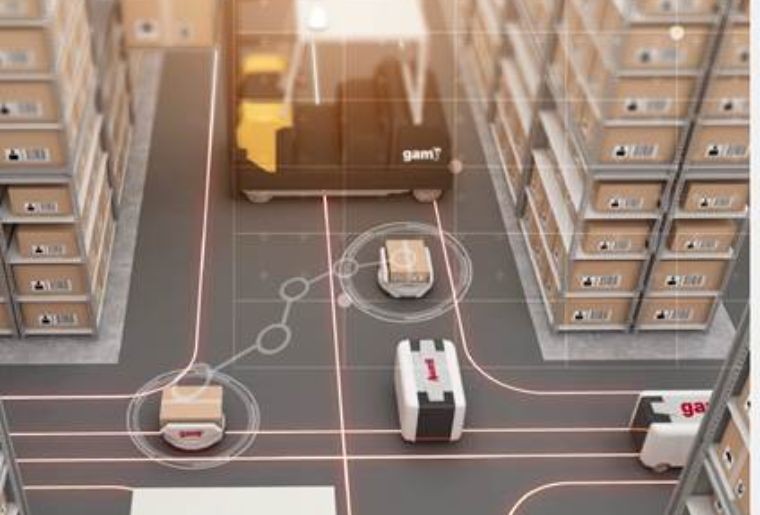
The food and beverage sector presents a series of logistical and production challenges that are ideal for being automated through AGVs. These vehicles enhance factory safety, improve product quality, protect brand reputation, and help producers incorporate more sustainable business practices. As if that weren't enough, this automation solution increases operating margins and improves response time to market changes.
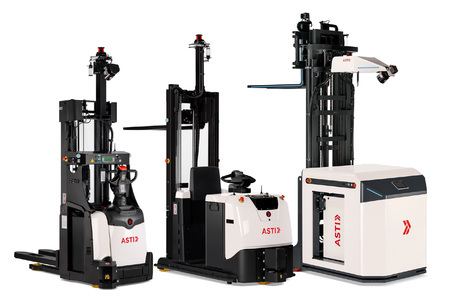
In this article, we review the main application areas and types of AGVs within this competitive sector.
Applications:
Automated Guided Vehicles (AGVs) are ideal for automating warehouses and facilities in the food and beverage sector, performing tasks such as:
- Raw material unloading.
- Storage and retrieval of pallets in the warehouse.
- Material movement to production lines and from end-of-line.
- Loading of finished products.
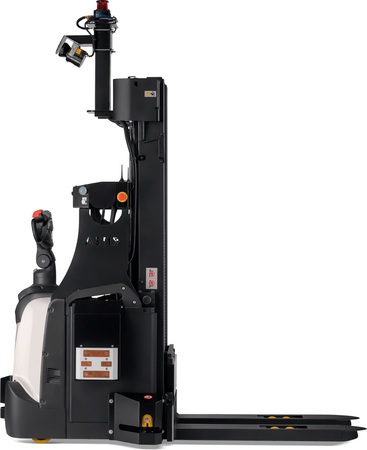
But that's not all, they are also capable of performing many of the food transportation operations in environments that are less friendly for operators:
- Cold storage.
- Freezers.
- Drying ovens.
- Salty or oily areas.
- Ripening rooms.
Types of AGVs
Each application requires a specific type of vehicle, capable of perfectly fulfilling its specialized task. We can talk about:
- Forklift AGVs, for pallet transportation.
- Platform AGVs, for moving unit loads or finished products.
- Towing AGVs for material carts.
- Mouse-type AGVs, with a very low profile, to slide under carts and pull them with a retractable pin.
And if that weren't enough, each AGV family can incorporate a different navigation system, tailored to the environment and task it needs to perform:
- AGVs with magnetic tape on the surface, which they follow using a magnetic reader.
- AGVs with laser sensors, triangulating their position using reflectors.
- Optical vision AGVs, with 3D cameras that recognize the environment.
- AGVs with SLAM navigation, the most natural yet complex navigation system.
Which system should I choose for my facility?
- Economic cost: what investment is necessary, how it is amortized, and what return it offers.
- Required cadence: how many AGVs are needed to provide an adequate material cadence.
- Type of warehouse: what is the physical layout of my warehouse? Are there mobile obstacles? Are the aisles narrow? Do I store at heights?
- Indoor/outdoor use: do the vehicles operate indoors, outdoors, or both?
- Trajectories: fixed or multiple.